Skip to content
  • Home
  • About Me
  • Page
  • Contact
  • Blog
  • Testimonials
  • Facebook
  • LinkedIn
  • Twitter
  • Instagram

Search

Text Widget

This is a text widget, which allows you to add text or HTML to your sidebar. You can use them to display text, links, images, HTML, or a combination of these. Edit them in the Widget section of the Customizer.
  • Uncategorized
  • Facebook
  • LinkedIn
  • Twitter
  • Instagram

Dispatches by Alec

  • Home
  • About Me
  • Page
  • Contact
  • Blog
  • Testimonials
  • Uncategorized

Chance encounters and exploding cornhole

alecgrych's avatar alecgrych April 8, 2018

When last traveling to Colombia, I set aside a few days to spend at a village in the coffee highlands, or eje cafetero. Which to pick was the question. After meeting a fellow Wisconsinite in a hostel in Medellín, who recommended Filandia, I was hooked. With nothing to lose but spare time, I caught a bus from Salento towards Armenia, only to have to cross the entire highway to the opposite side on foot to be able to transfer. A brief conversation with a local pointed me in the right direction of the needed bus and twenty minutes after landing at the impasse, we were en route to Filandia.

This pueblecito – small village, about 45 minutes from Salento brought a certain sense of authenticity that was lacking in it’s larger sibling to the north. Very few non-Colombian tourists frequented the village, which made the experience all the purer. And of course, every single one of them stayed in the same hostel. Located near the main square, this bright blue bungalow stood out as a haven for travelers to escape the daily rains and take in multi-lingual conversation with the ever-present French contingent.

Disclaimer – I am not a small town person. The energy and options brought by a big city excites me. Usually. But this was not the case in Filandia. The same Wisconsinite recommended a hostel which luckily had space – and appeared to be the only one in town. Backpack in hand, I found my way eventually to Bidea Backpackers. Naturally, the hostel worker attending the front desk was from New Jersey. It’s only a coincidence that one travels to a new continent and the first person to converse with in this tiny village is a two-hour flight away. We spoke briefly, then headed for a drink at one of the local three bars. Charming. Real Madrid was finishing their game so we asked if space was available at a table. One of the patrons noticed our appearances and spoke to her in English. She mentioned her home in Madison county, New Jersey, of which neither of us were prepared for the following statement. Not only had this Colombian known where Madison was located, he had lived in a nearby town. For 34 years. And spoke perfect English. Taken aback, we spent the next six hours drinking Club Colombia beers and chatting in a mix of English and Spanish with this former-expat painter and numerous friends of his that stopped in. The conversation ran the gamut of what Americans can expect to be grilled on abroad: the Trump administration, a potential wall, how easy it is to visit and/or obtain permanent residence, what the cities are like, and most importantly, how much we were paid. The Colombian then offered to show us his finca, or country estate that had recently been sold. A pleasant introduction to a lovely small town.

After our vocabularies had been spent over those six hours, we went back to the hostel to converse with the rest of the backpackers. Now, I had only booked one night, with plans ever-shifting for the following days. But the hostel felt like home. Luckily, I was able to extend my stay with the sole act of not packing up any of strewn clothes. The staff at the desk welcomed an extra night, as I would have had to pay regardless of leaving or staying. Fast forward the day of mountain biking/bike walking, as my chain snapped, and night fell. Returning to the hostel, the owner’s cousin, who lived a town over, had come to stay for the night. He was relatively well-connected and within minutes of chatting to our group in the common room, suggested that we go to play Tejó. It’s usually reserved for the weekends, but by pulling some strings with Lucía, a bar owner in town, he was able to open up a field for us to play.

Tejó is a popular game in Colombia. For Americans, it’s known as cornhole or bags. However, there’s an explosive twist. The game is played by throwing stone paperweights some 20 feet/6m onto an angled muddy board. There’s an iron circle in the middle and on the circle, four triangles laden with gunpowder are placed on top. When the stone connects with the gunpowder and the iron, a reaction occurs. Snap, crackle, pop – the triangle explodes and the gunpowder lights, emitting a jet of smoke and a burning smell. Combine this with beer and don’t try this at home. Points are scored the following ways: one for the closest stone to the ring, three for cracking one of the triangles, and six for both cracking a triangle and getting the stone in the middle of the ring.

Our group was eclectic. Two Americans, too many Argentines to count, three Colombians, one Canadian Zidane-döppelganger, two French, and one Chilean. We played for three hours – the room coated in gunpowder fumes, empty Club Colombia bottles, a mish-mash of languages, and lots of cursing. At the end, my team had won: the first to 21 points is the victor. We washed off our stones and headed to the plaza for a celebratory beer or several. This group of hostelgoers and employees, switching languages, the only non-locals in the area, enjoyed our night of sport and togetherness. To me, the human connection is one of the most rewarding aspects of travel. Come alone, brush away your shyness, make friends, and quite literally blow things up. The night coming to a close, our ragtag group headed back to the hostel to relax and reminisce on the night. To the hostel staff at Bidea Backpackers and locals of Filandia, thank you for your openness and kindness. Let’s work on bringing Tejó overseas.

  • Uncategorized

Reflections on an exchange abroad part 2

alecgrych's avatar alecgrych April 4, 2018

Study abroad. International exchange. Erasmus. While all employ different verbiage, the key concept remains the same. Leaving one’s home, enrolling in a foreign university for a month, term, or year, hopping on a plane, and immersing oneself in the culture, language, and customs of an alien land. It can be scary. It can be rewarding beyond one’s wildest dreams. It can be tough. It will be tough. But the personal growth from such an experience will pay dividends that will remain for a lifetime. Arrive as you are, depart transformed.


I was extremely fortunate to be able to study abroad not once, but twice. As an International Business major, some form of exchange abroad, in addition to language study, is required. This was made even easier by the direct transfer of numerous credits, which facilitated my second trip. The wonderful individuals at Marquette, ICADE, and Loyola Andalucía helped make my dreams a reality, and for that, I’m eternally grateful. From Madrid in Spring 2013, to returning to Córdoba in Spring 2015, my intercambio español allowed the exploration of Spain focusing on two separate lifestyles, provinces, dialects, housing situations, and friendships. I can wholeheartedly say that I am a different person as a result of this year in total spent abroad.


As a result, I was able to give back by offering guidance to students interested in spending a semester in one of Marquette’s four exchange programs. As an informal advisor, I hope this forthcoming knowledge can be of use to anyone interested in the journey that is an international exchange. Onwards.


January 3, 2013. I departed for Madrid, with a layover in Munich, with nary an idea how the semester would pass. Fast forward to June 10, 2013, and I left back to Milwaukee. 2 years nearly to the original date, I would leave again for Córdoba. Here’s my take on the good, the bad, the ugly, the growth, how it shaped and is currently shaping my life, and advice I wished I knew before. Followed up with general insight for those jetting off, either physically, or mentally.


Madrid:

The good –

My roommates truly helped shape my experience. Through previous advice, I booked an apartment for 6 months on a whim, bank transfer et al. This piso ended up being Madrid’s version of the show The Real World. We were 10: 5 Spaniards, 2 French, 1 Italian, 1 Scot, and myself. Spanish was the primary language, although I spoke English with the Scot and one of the French nationals. This 10 bedroom 3 bathroom was my first experience with international roommates. As a result, not only did I learn to cook and improve massively my Spanish, but also this set a path for my following roommates in college. We would watch fútbol matches, go out, eat together, or just stay up and talk until late at night. I’m in contact with 2 of them still.

Before Madrid, my Spanish skills were at best okay. Language acquisition grew tenfold due to simply being in an environment where communication was done entirely in Spanish, picking up new words from television and the supermarket, and polishing my acento castellano. Although classes and classmates increased the amount of spoken English, simply by living in that environment, my language skills improved tremendously.

Madrid is a transit hub. Throughout the semester, I took advantage of international planes, trains, and automobiles to travel Europe. One dozen countries were visited, countless cheap flights purchased, and most of the weekends spent out of Spain. I also utilized the extensive bus connections to explore nearly all the provinces. Stories, experiences, delays, and growth abound, I learned that above all, traveling makes me happy. Due to the constant nature of country/province-hopping, I caught the travel bug. And this lone gain has made the most difference in my life going forward.


Study abroad will stretch your comfort zone. I was lucky to have a great base of friends and colleagues to help me assimilate to the culture and parents who were a text away. Luckily, not once did I feel homesick. Through the experience in Madrid, I became more confident in my abilities to handle anything on the road and even started solo traveling. This again marked an important event in my life. I can’t imagine life without solo travel. As a result, I re-defined career goals and discovered what was important in life – constant exploration, knowledge acquisition, and global relationships. I became more open, social, friendlier, assured, and energized. Studying abroad equipped me with the tools to converse with anyone about any topic, and this was even further developed in Córdoba. I became an ardent Real Madrid and never turned down a new experience. This developed a certain “we’ll figure it out later, just go forward” attitude that has served me well around the world.


ICADE was a ten-minute walk from my apartment and the classes weren’t challenging. All in English and primarily with Americans and a few other Europeans, the workload was small. Combined with only transferring credits, and the onus on high performance was off the table. As a result, we could all enjoy life without stressing over grades.


Madrid is a world-class city for art, nature and food. I visited several times the Prado and Reína Sofía, plus other small museums. I spent time alone in the parks and developed a greater appreciation for time alone. To be honest, I didn’t eat out frequently in Madrid, but this was more due to having less of an interest in food and more about seeing how many beers would be drunk at happy hour. The Quintessential Ugly American.


The bad/ugly:

I didn’t branch out nearly as much as I should have. Although my language skills improved, the majority of the time was spent with other Americans, both in class, and at night. I didn’t build many long-lasting relationships and certainly fewer with Europeans. English classes meant that my Spanish could have been better. I didn’t look into clubs/organizations and took zero advantage of cultural events in the city.


The majority of my nights were as follows: Tuesday beer pong at an Irish bar, Wednesday and Thursday clubbing, Friday – Sunday traveling. Lather, rinse, repeat. This sounds like it could be a schedule back home. For all intents-and-purposes, it was. Granted, my body could handle the continual cocktail of no sleep and partying then, but that would be impossible now. I would have changed this aspect to spending more time building relationships and taking advantage of cultural events, such as more Real Madrid matches, meetups, and taking advantage of living in a global city. I was young, dumb, headstrong, and easily persuaded by groupthink. This was grown out of, but really brought to life in Madrid.


Overall, my experience in Madrid was perfect for a clueless 20-year old who wanted to travel, grow, and explore. Slight downsides aside, I can’t remember ever feeling depressed or downtrodden. This love of Madrid led to me returning two years later to Córdoba, where my Spain experience truly bloomed.


Córdoba:

The good –


Where to start? Córdoba was my foray into Andalucía. The language, culture, attitude, and weather differed from Madrid. Córdoba is ten times smaller than Madrid and has a much homier feel to the city. Walkability is incredible and there was no need for public transportation. The campus was a 25 minute walk; the center only slightly less. Everywhere in town was under an hour on foot, even the outskirts. Combine cobblestone streets with endless sunshine and you have the recipe for bliss. As far as costs go, Spain is cheap. And Córdoba is much less expensive than Madrid. This facilitated dinners/lunches/breakfasts/drinks out on a consistent basis, with money left for travel.


My language skills improved immensely. The first few weeks were difficult, due to adjusting to the dialect, but everything clicked into place. My roommates and classmates spoke little or no English, which forced me to speak their native language. As a result, the accent, vocabulary, and general comprehension grew more than ever. I can commute with any Spanish speaker around the world and although it’s a bit rusty, my listening is almost perfect. The classes were more difficult but overall manageable, without excessive homework or tests. The few projects and presentations were not difficult, and made me step out of my comfort in the language. One comment from my Strategy professor, Emilio, really made me think. “Alec, you speak a purer Castellano than I do”.


Being a small town and university, everyone knows everyone else. I was involved from the second day in with the Erasmus program, and made lifelong memories and relationships. Events, travels, nightlife, and football matches came from this organization. I dove in head first and never looked back. The majority of my friends were European. My roommates were Extremeño and Almeriense, spoke no English, and loved flamenco, partying, and Real Madrid. Needless to say, we got along fantastically. I’m still in contact with one. Nights were spent on a rooftop with other Loyola students from around the world, talking, laughing, drinking, and telling stories. My apartment complex was almost entirely Erasmus students and the rent was cheaper than at Marquette. Although it’s cliché, life in Córdoba was perfect.


I did travel that semester, but in a more limited focus. By not having Friday classes, I would take solo day trips around the province of Córdoba and checked off visiting all 8 provinces in Andalucía. To name a few memories – attending the local fería in my roommates’ hometown and staying with his family, trusting in myself to handle day trips, a group voyage to Morocco, and an extended Central European jaunt complete with Blablacar delays, Soviet relics, and carb-loading. This trips were mainly solo, which really developed my love of independent travel. Overall, I grew immensely as an individual and took advantage of the opportunity to branch out to make friends with people from a variety of backgrounds, ethnicities, languages, and lifestyles.


In general, the lifestyle in Córdoba was bar none, the greatest I’ve ever been a part of. Lax class restrictions combined with gorgeous weather meant that the majority of my free time was spent outside in a park, at a restaurant, or wandering a nearby village. Everyone’s class schedule intertwined, meaning that we were all free the same nights and weekends. Every weekday was complete with socializing, relaxing together, and rarely being alone. Strong bonds were developed and our group turned into a family. Combine massive relationship-building with cheap food and drink, and a lifestyle second-to-none was established.


The bad/ugly:

Much of the same. I was never depressed or homesick. Although the first few weeks were tough with understanding the language, I worked at it and improved. The only blot was the apartment situation. Like Madrid, I booked one in advance. This was a mistake. My roommates and I did not get along and the apartment itself did not feel like home. I moved after a week to another place, where the stay lasted 2 days. This was due to the roof collapsing and needing to find alternative accommodation. I was upset that my second apartment was not spanish-speaking and was given a mulligan with the roof falling apart. Luckily, the management company took my words and found me a place with José and Juan. When I walked into the kitchen seeing first the pata de jamón, I knew I was home. Outside of a few travel missteps, nothing really bothered me.


Overall, the experiences in Madrid and Córdoba changed my life. No longer did I want to follow that boring routine of graduation-hometown stay-same friends-marriage-kids-retire. Life was to be lived through experiences and making connections. I wanted one full of travel, of knowledge, of discovery and exploration. Perpetual growth would be the standard, not some distant aspiration. I threw all my previous plans out the window and moved to Chicago, kept my international connections through being active in the local Couchsurfing community, and traveled whenever possible. This includes 3 continents; chock full of adventures that never would have happened had I stayed in the local bubble and not taken the step to study abroad not once, but twice. Arrive as you are, depart transformed. My life will be lived around the globe. I’ll be going back abroad for an MBA and hopefully staying – a serial expatriate. With an ever-expanding comfort zone and a palate for exotic foods, life is so appealing. All of these insights, without a doubt, would never have been internalized or conceptualized without the unforgettable experiences granted by studying abroad.


General advice/what I wish I knew:


Study abroad can be confusing. There’s tons of information to digest, let alone a new language and friends from different cultures. I prepared pretty well and learned on the go, but I do wish I had a better handle on the apartment hunt. I don’t recommend booking an apartment in advance. You could get lucky, but don’t bet on it. Take time to scout out properties and stay in a hostel for a week instead of needing to find accommodation in advance.


Learn the slang in advance and train your ear. This will save hours on trying to decipher local lexicon. I don’t care how hard the language is. Learn it and stop making excuses. In addition, always learn a few terms in the language of your travels. Hello, goodbye, thanks, yes, good day, and cheers will not only show you care, but will invite others to be more friendly.


Get comfortable with being uncomfortable. This experience will stretch your comfort zone. DO NOT stay motionless and refuse to speak the language, only have friends of your nationality, and live life as it would be back home. The richness of being abroad can only be uncovered by adjusting yourself to this new country. Mimic the eating schedule, master the dialect, gain the attitude and mannerisms, and become a local. Attempt to keep your life the same and suffer the consequences of no growth. Even better, pick a local football club to support and watch or attend matches. Have a local bar to frequent; becoming friends with the proprietors and patrons alike. This will enrich your experience and quicker acclimate you to the customs of wherever your temporary base is.


Get involved. In Spain, especially in smaller towns, Erasmus is more of a community than an organization. Be active and be known. You have this incredible chance to leave your mark on an entire university – do not leave that begging. Converse in languages that aren’t your native tongue.


Mess up. Fail. Get lost. Overpay or forget to book an airplane ticket. The best chances for learning come after mistakes, so don’t fear failure. No one cares if you miss a bus back – there will be another. No hostels open? Take a night bus somewhere. Alone and tired and anxious in a new city? Look for a local pub. Even if you travel solo, you’re never truly alone. Become comfortable constantly talking to strangers and adjust your mindset about the concept of friendship. Stay in hostels by yourself. Do things by yourself. You grow when you depend on yourself for whatever action is taking place. Studying abroad offers the chance of a fresh start, unlimited personal development, traveling, possible romance, and career shifts. With a little effort and awareness, all of the above is possible. I encourage solo activity and creating a base where your confidants are from different backgrounds. Enjoy the international environment and for the sake of all that is holy, branch out. You never know who you’ll meet, who you’ll become, or what you’ll learn. I’m so passionate about study abroad because of everything that it’s given me. Figure out who you want to become – it’s not easy – but take steps there on the path to self-actualization. Take the plunge and travel solo. Start small with a village or even daily activities and build up. You’ll move mountains. All in all, study abroad has entirely changed the course and direction of my life. And for that, I am forever grateful. Arrive as you are, depart transformed.

  • Uncategorized

Overnight cruising in Ha Long Bay

alecgrych's avatar alecgrych March 20, 2018

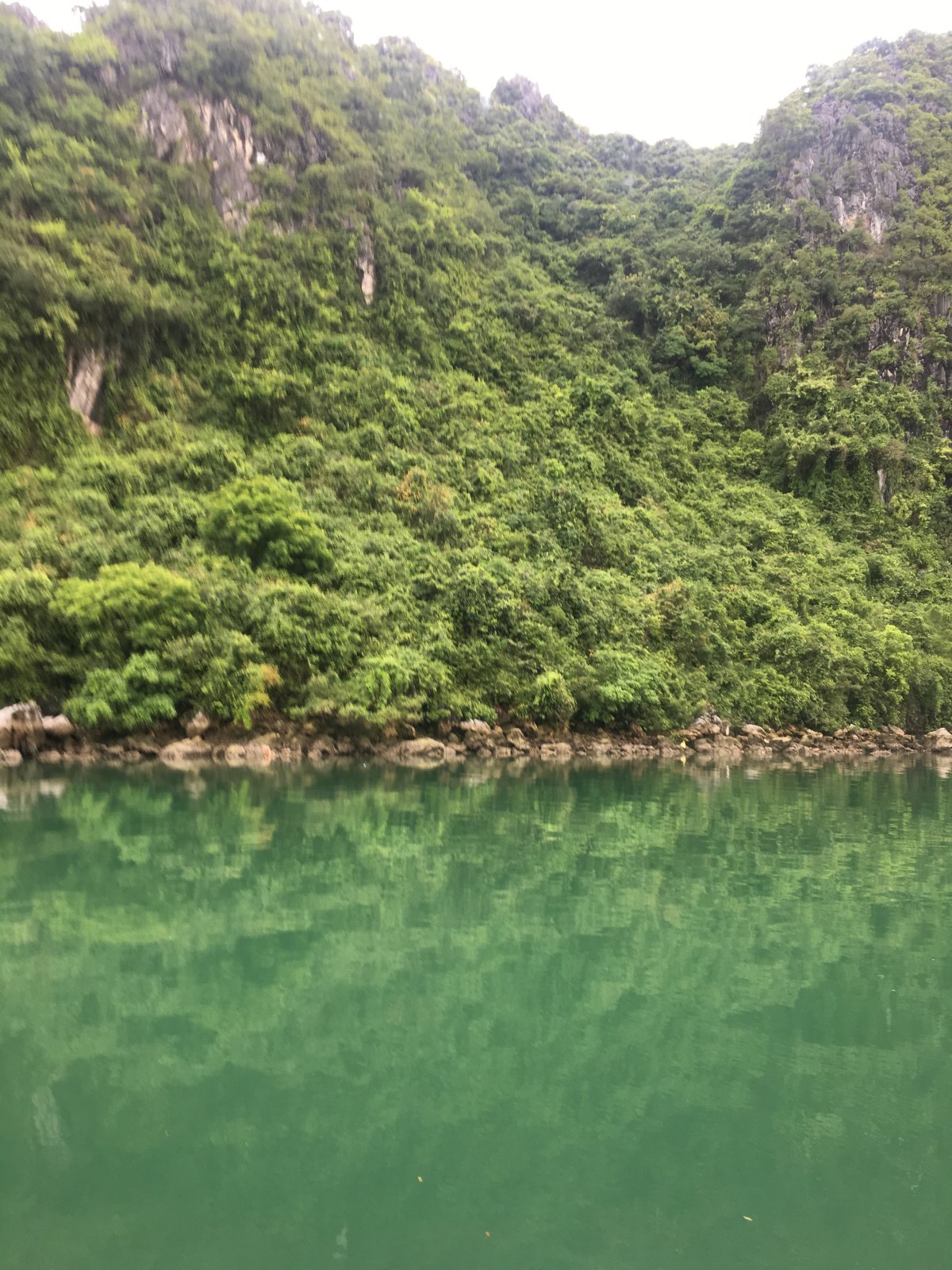
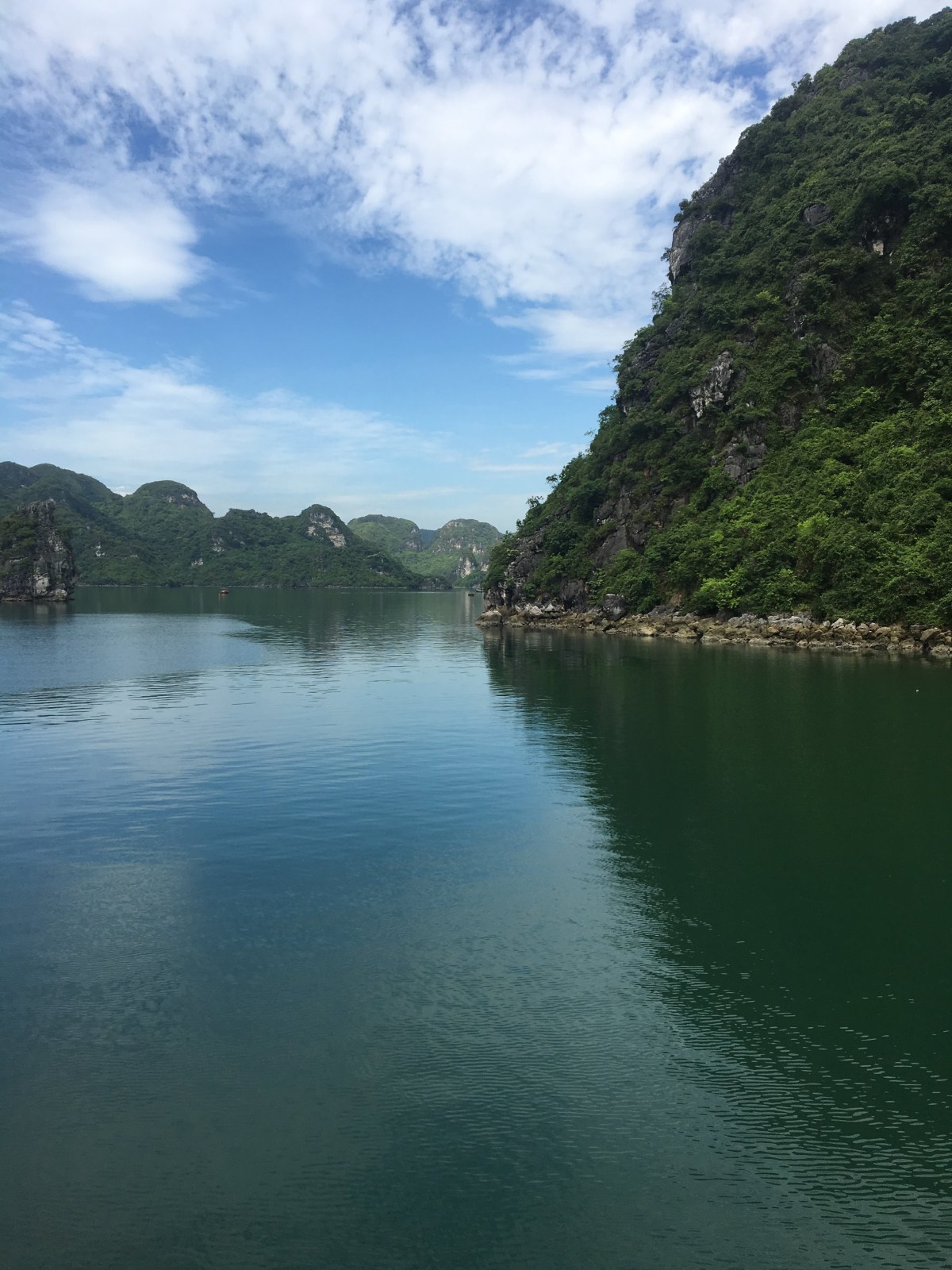
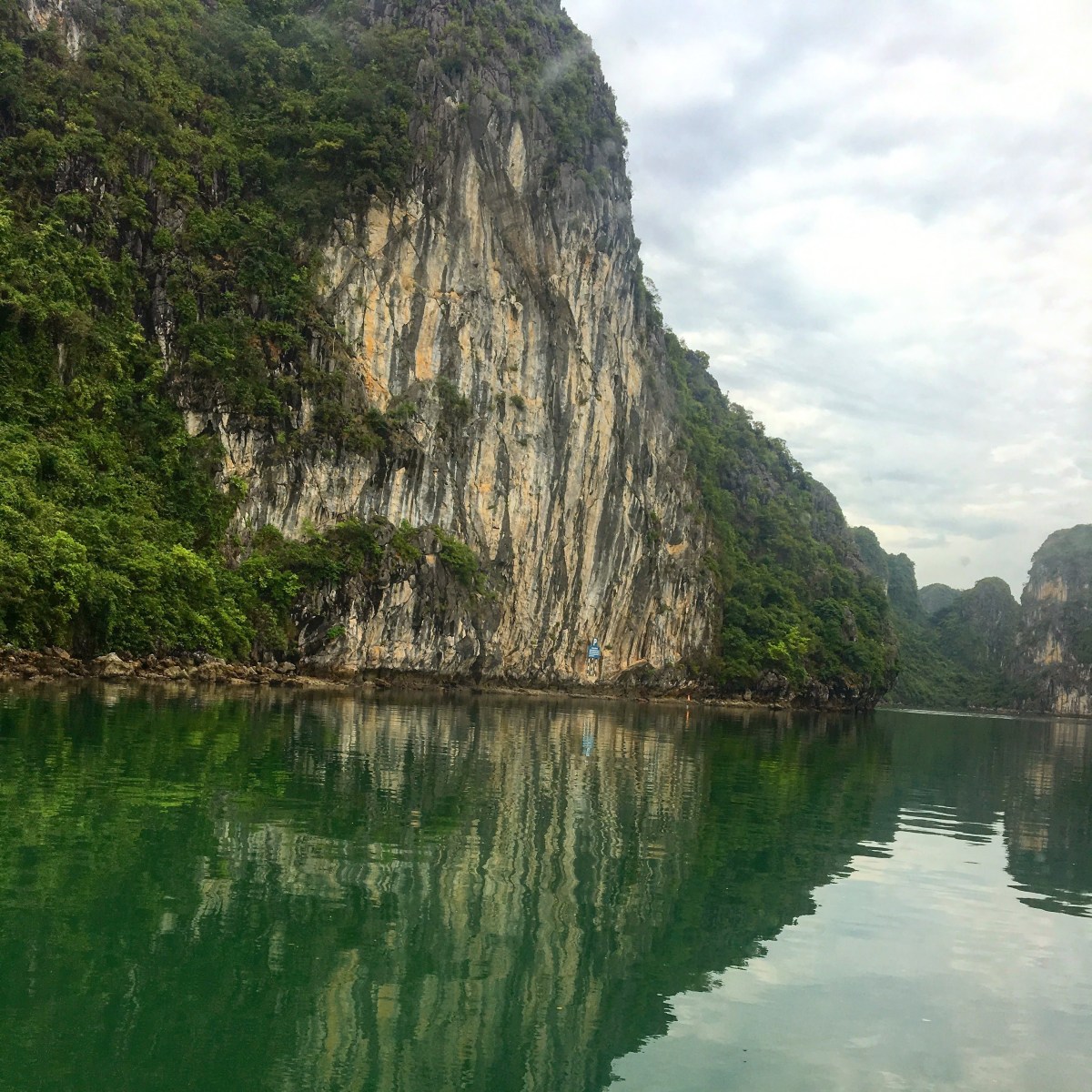
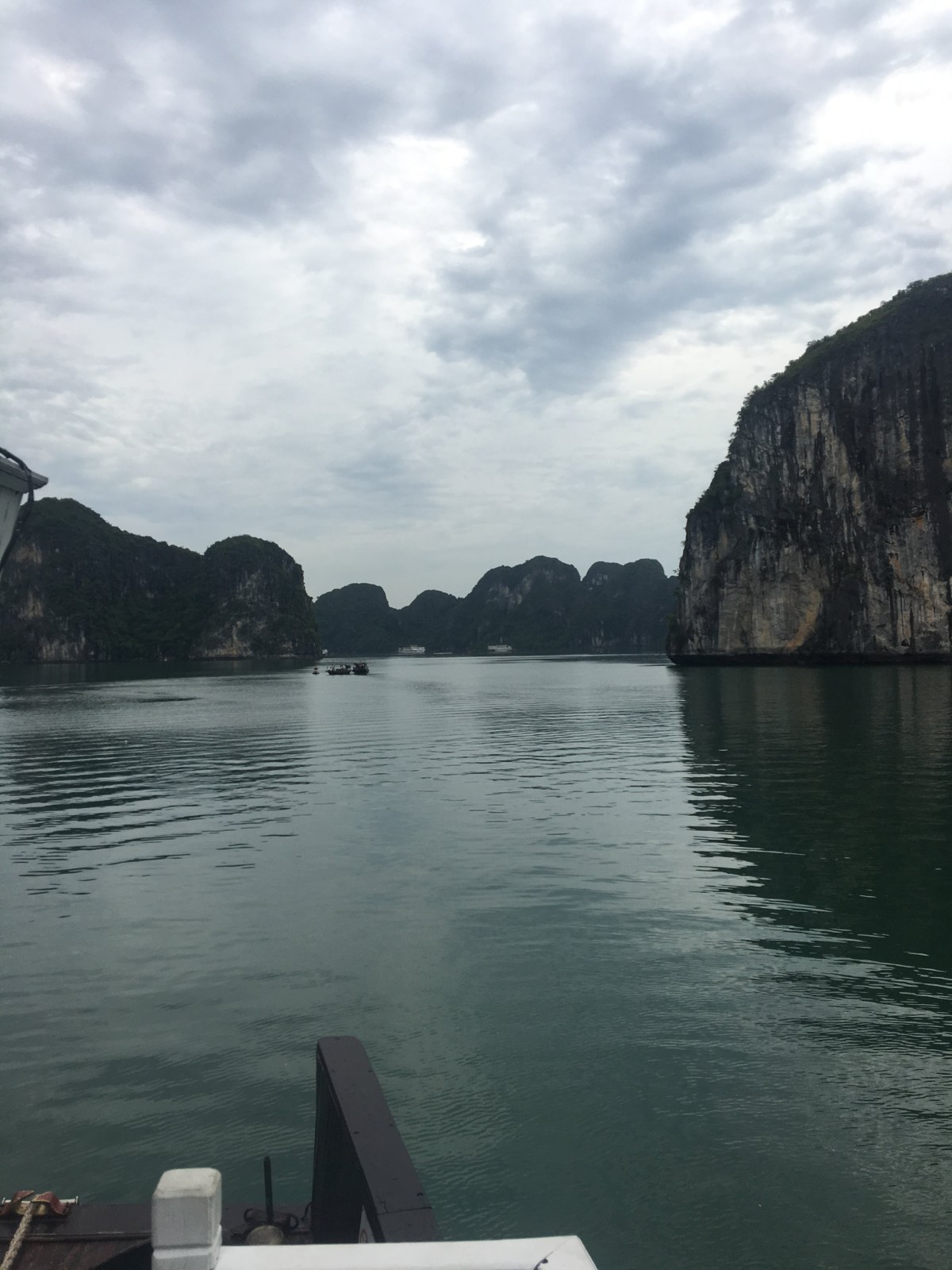
Ha Long Bay is one of the most-well known attractions in Vietnam. Ringed by endless karst peaks, this UNESCO World Heritage Site is packed by visitors, all of whom admire the turquoise waters and the emerald spires that continue on to the horizon. The easiest way to arrive is to travel to Hanoi. From there, countless tour companies offer cruises lasting from a few hours to a few nights. Naturally, the level of debauchery can increase with the amount of time spend aboard the cruise. Independent travelers can hire a boat or make the trek out to Cat Ba island for a more tranquil experience, but the majority of those seeing Ha Long Bay, do so from the deck of a multi-story cruise ship.

IMG_0867.jpg

I chose to go with the simpler option, in booking a cruise through my hostel in Hanoi. There were two options – laid back, and party. I was looking a more social atmosphere and selected the party cruise. We were to depart the following morning. As the next day arrived, those of us going on the cruise packed into a shuttle and departed for Ha Long Bay. The ride took a little over two hours and administrators checked everyone in for their respective boats. That’s when the first sign of trouble occurred.

For those on my boat, thirty or so, ours was not yet in the harbor by the time everyone else had already boarded. Certain ideas were floated such as refunding the cost and applying it to a new boat, paying a dockhand to float us out for the day, or even skipping the cruise entirely and somehow finding transit to Cat Ba. This is in addition to the air conditioning breaking in the reception area, as summer in Vietnam meant unbearable heat and humidity for those of us from cooler climates. Finally, after much despair, tears, sweat, and sunburn, the boat arrived. Backpacks over drenched colored tank tops, we boarded, about to embark on a potentially calamitous adventure.

The cruise had a basic setup – triple occupancy in rooms the size of a closet with little room to even stand up let alone store luggage. However, the very nature of the “social” experience was to spend as little time in the room as possible and more time spent taking in…the sights. Those in charge of the trip started off by serving the most Vietnamese meal possible – eggs, rice, and ham. Clearly, the money paid for the trip did not go towards cuisine. Or comfort in accommodation. Beer wasn’t even included in the cost. So what were we paying for then?

Fast forward to post-lunch, as the group branches off into pairs for kayaking. Running on the buddy system, two people per kayak were to head off towards a series of coves to get a close-up view of the karst buildup. I joined up with a John, an Englishman from London. Naturally, a few of us brought up the idea of racing to the cove. This was to become a herculean effort, as also on the boat were 4 members of New Zealand’s Olympic Crewe team. They missed qualifying for the Olympics so instead of packing their bags home, they took off for Vietnam. It’s only reasonable. They destroyed the rest of us in arriving at the cove without breaking a sweat. Men against boys, literally.

IMG_0866.jpg

After looping to the cove and further sunburning whatever areas of skin were uncovered, the crew arrived back to the boat. We all took turns jumping off the deck on the upper level, with flips, dives, flails, cannonballs, and sprawls aplenty. The warm crystalline water combined with an azure sky and comfortable heat provided for moments of endless bliss. Life was pretty good at that time. The group banded together to talk about travels and swap stories over Tiger beers. From all walks of life – Kiwis, Americans, Brits, French, German, and Dutch-Indonesian – we were all able to create nicknames and play games. Due to my perpetual farmers tan (despite wearing tank tops), I was given the nickname T-shirt. Not exactly flattering, but because names are tough and a spread of countries meant that made-up naming was the quickest way to build camaraderie. Then, the monsoon happened.

IMG_0870.jpg

In Southeast Asia, the monsoon season starts in May and goes until August. This doesn’t mean that it rains all day; rather, in short bursts, if at all. When one is in a city or village, escaping the rains is simple. On a boat in open water, this is slightly more difficult. The rains began after the sun had gone down. As we had all been through a monsoon, no one was worried. But the rain didn’t last fifteen minutes. It didn’t stop after an hour. The Kiwis thought to make the most of the situation and went streaking in the rain on the top deck. BOOM! The winds pick up and howl, lightning illuminates the water and a loud thunder clap echoes through the boat. It begins to rock back and forth, the hull keeping all but the choppiest waves at bay. CRASH! The front door shatters and the side windows follow suit. Glass fills the floor of the cabin as rain sweeps in through the fist-sized holes in the side. At this point in the night, most of the cruise-goers were nonplussed by the storm, due to several hours of imbibing. Floors soaked? No problem. Is the beer safe? The storm raged on for hours, before the majority of people were sick of the noise. People retired to bed, unconcerned if the bed would float should water levels rise. Looking back on it, with no backup, capsizing or evacuation actually may have happened.

IMG_5403.jpg

The following morning, we went to survey the damage. The glass from the storm doors was completely shattered and lay in pieces on the wood. Few windows were left standing and the tan varnish looked like mahogany. To try and distract the hungover masses, the crew served yet another as traditional Vietnamese breakfast – rice and eggs – and attempted to teach the cruise-goers how to make spring rolls. After the cook’s perfect roll, the rest of the attempts look like squashed burritos. The combination of post-storm displeasure, mass motion sickness, and a lack of ibuprofen turned any aspirations into defeated dreams. Deferred to a more stable state of mind, perhaps.

After breakfast, we set back off towards shore. Of course, the shuttle to return to Hanoi hadn’t arrived yet. Another hour was spent killing time until transportation had come. I was packed onto the wheel well for the two hour commute, which, for someone with long legs, was akin to torture under the Geneva Convention. At the end of the day, we had bested the storm, with wallets a little lighter and clothing a little wetter. At least this time, it wasn’t purely sweat. As the transit dropped us off near each hostel, I stopped into a market to ponder my luck and the previous day. The smell of noodles and chili sauce overwhelmed my sinuses. A proper Vietnamese meal – neither eggs, nor ham.

IMG_0569.jpg

  • Uncategorized

How low can you go – exploring the Vinh Moc tunnels in Vietnam

alecgrych's avatar alecgrych March 13, 2018

In Vietnam, the most well-known tunnels that one can explore are called Cu Chi, outside of Saigon. Used for combat by Vietnamese guerrilla soldiers during the Vietnam War, tourists can these days visit the tunnels to take photos have a glimpse into guerrilla warfare. However, these tunnels are extremely small and being well-known, just as touristy. I elected to skip these tunnels and headed north to the center of country, to a town called Hue. The inspiration came from watching Anthony Bourdain visit the town and traverse a different set of tunnels: Vinh Moc.

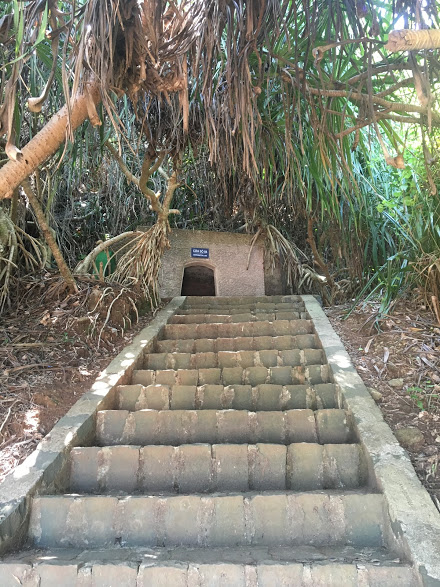
Located in Vinh Moc, Quang Tri Province a few hours north of Hue, this village serves well for a day trip towards the DMZ. When arriving to the main area however, you won’t see a standing town. Look underground. These tunnels differ by having served as a bomb shelter during the war. The Americans had accused the villagers of conspiring with the guerrillas and as a result, began to bomb Vinh Moc. Over the span of three years, seven tons of bombs per person were dropped on the village. Instead of surrendering, the villagers moved lower. They built these tunnels between 1966 and 1967. To avoid detection, the soil had to be dispersed under the nightfall. 13 entrances and exits were constructed, including seven to the sea. This proved important for not only ventilation, but to offer a sea route also.

Vinh Moc Outside

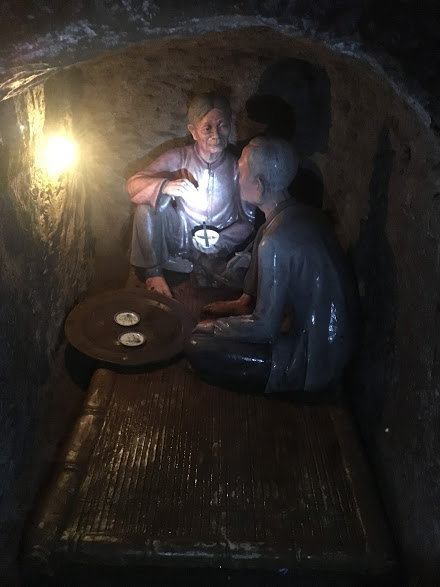
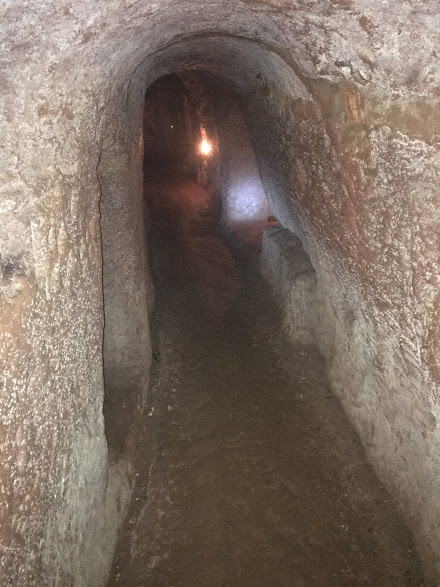
Entering the tunnels, there is absolute darkness. Sweat sticks to your skin as the lack of ventilation prevents the cool breeze from giving a break. Fire up your 1$ loaned flashlight and strain your eyes towards the seemingly endless, snaking hallways. Stand up straight and you crack – the tunnels are only about 5’5 high. As someone who is 6’3 (1,91), this was not helpful. Three hundred villagers lived within, seeking shelter for six years in total. Seventeen children were born in the tunnels, of whom six still reside in the village. Turn too quick and you may miss it – daily life went on. Children attended school classes, women gave birth, as men dug deeper to avoid the falling bombs. Meeting rooms and kitchens are located through the cave-like system, with smoke releases disguised to prevent giving away signals. A generator would power movies – a brief respite from the horrors surrounding the dwellings. These tunnels are a testament to engineering, sheer willpower, perseverance, and the spirit of the Vietnamese people to bend but not break during a time of destruction. Families held court and spent time in dug-out quarters barely larger than a cubical.

Inside Vinh Moc

Light up Vinh Moc

Continue hunched over throughout the labyrinthine halls, to try to even piece together an image of what living below ground, in the darkness, can to do not only one’s psyche, but a greater view of the world also. I can only imagine the hardships undertaken by the residents who left solely to tend to their fields; those of which weren’t turned into smoldering craters of shrapnel. After twist after turn, you emerge to an exit facing the sea, the salty breeze filling your nostrils and serving as a reminder of how much you actually sweat. In the modern sense, these viewpoints serve as a return to sanity; one emerges from the cave into unenclosed reality.

As I sat on a wooden railing, pondering life in the tunnels, a tour group emerged, chock full of Vietnamese school children. They ran towards me shrieking, camera phones in hand. Everyone wanted to say hello and take a photo with the faranji – foreigner. I gladly welcomed the hoards of people half my height, feeling like a paparazzi-surrounded celebrity. Several of the adults shook my hand, welcoming me and asking how my stay was in Vietnam and in Vinh Moc. Their outright friendliness and welcome stood out, given the fact that American planes decimated the village and its surroundings. Their hostility would have been understandable, but there was nary even a frown present. The ability of these people to look past the atrocities committed and take in every tourist with open arms is something to be cherished.

Having made a loop, I found the motorbike guide near the entrance. He inquired about my visit, and we took off back towards Hue. A day well spent with unforgettable memories, as cliché as it sounds. For those looking to visit the Vinh Moc tunnels, it’s simple. I had paid for a two-day tour with a local guide which included this area, but full day tours depart from Hue regularly. Tunnel entrance was 40,000 VND and a day tour should cost 500,000 – 700,000 VND, depending on style of transit. At the time of my visit, the exchange rate was around 1 USD – 23,000 VND. For those looking for a respite from Cu Chi and a less touristy tunnel experience, Vinh Moc is well worth the expense.

  • Uncategorized

A Vicious Cycle: Biking Struggles in Filandia

alecgrych's avatar alecgrych March 11, 2018

When in a small town, the easiest way to get out into the countryside cheaply is to rent a bike. This is apparent in Filandia, a small village in the Coffee Highlands of Colombia. As motorbikes were unavailable, myself and three others from the hostel decided we would bike out into the countryside to visit another small town and a finca (rural estate). Naturally, the quality of the bikes were top class – 10 speed bikes that were constructed before I was born. But, for the low low price of 5000 COP, about 2 USD, shoddiness was worth the investment. We set out – a fellow American, French, and a Canadian who looked like Zinedine Zidane. Zizou was not impressed with the quality. Mon dieu.

We set off, wheels against the cobblestones, speeding downhill until an impasse pulled off to the side. The other American, who had previously visited the finca, directed us off to the right. This route was again downhill, but instead of being somewhat paved, was entirely filled with rocks. The road made American highways look perfect.

Due to not needing to pedal as much, I switched gears from the initial adjustment. However, something went wrong. The pedals jammed every up and downshift, and then released. The bike continued to move, so I thought nothing of it. After around a half hour of careening around switchbacks and the brakes threatening to give, we reached the first stop. Bidea Hostel, our accommodation, was building an extension in the countryside. This version would be smaller, albeit steeped in nature, truly providing an escape from the almost non-existent congestion in Filandia. Due to construction not being finished, we lounged around the hostel, playing chess and admiring the beauty.

Bidea Filandia Finca

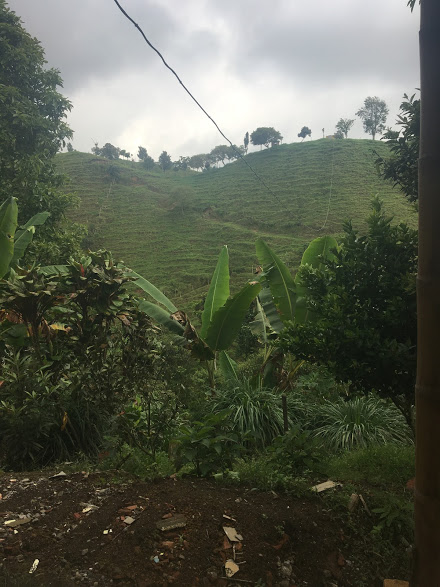
The supervisor told us that there was a viewpoint across the way, and could be reached with a brief hike. To our feigned surprised, a path didn’t really exist. People had trodden the hills beforehand, but anything concrete was not there. We ferried a river with the help of three strategically-placed bamboo poles and continued through mud-covered holes until the top was reached. This allowed for a lookout on the rest of the countryside as well as a view towards our final destination. Tripping, slipping, and falling on the loop back, we made it downhill back to the finca for a short break before carrying on.

Hammock

Our target, a nearby village named Ulloa was only a forty minute ride over the bumps and gravel. Needless to say, my bike could not handle the road and after an uphill venture, decided to give out. Of course, this happened when the others were ahead. GRRRRRRR ROUROUROUROU. Three dogs suddenly jumped out! I yelped in shock and positioned the defective bike as a barrier in between my pasty skin and their teeth. The owners came running out. “You don’t like dogs?” asked one, puzzled. Well, when the chain gives and I can’t move, it’s scary. I offered my hand and pets to the dogs who came close, sniffed, jumped back, and began to bark again. The other man took a look at the bike, snapped the chain back into place, and shooed the dogs inside. They wished me a safe trip, saying the village was only another thirty minutes away. I carried on, confident that the bike would hold.

CRACK. Another uphill try and the chain again came loose. Zizou bent down, looked, and determined that one of the screws that held the chain in place was broken. Only a replacement of the part would solve the issue. When the chain circled through it’s motion, the broken link would create friction and cause the chain to fall off. As a result, further damage would likely occur if I kept pushing it on hills. Downhill or flat portions were fine, but any uphill gradient would need to be walked. No sense in complaining. Onwards. Fortunately, the bike was light.

They pushed on, graciously slowing down so that we connected in certain parts. After what seemed like an hour, we finally arrived at Ulloa, myself more sweat-drenched than the others. It would be impossible to ride back uphill without risking further damage, so we elected to pay for transport back. After lunch, naturally.

No other tourists were in sight. We stopped at a restaurant in the main square, offering lunch combos for 7000 COP – a steal. The other American wasn’t partial to eating to meat, so she asked the server if the offerings could be served without meat. The server gave a brusque “NO” before turning to us and asking politely what we would have. Lunch was a glass of some local fruit juice, tripe soup, and a mixed plate of salad, skirt steak, beans, rice and plantains. Pretty similar to the majority of meals offered in Latin America. Despite removing the main protein, due to there being no vegetarian options for the other American, she was charged the full price, same as us. After a few dramatic diatribes, we decided it wasn’t worth the time and effort, paid, and got up to look for transit.

In Filandia, the most common form of shared transit are Willys, or Jeeps. They’re similar to Songthaews in Thailand, but with space for people to stand on the back and hold the roof rack. As the jeeps only leave when full, anyone with a smaller party has to pay the difference if they want to leave. The first driver quoted 40000 COP – not extravagant, but more than we were willing to pay. We decided to walk around, bikes out front, to explore other options. (Thanks Destination Addict!)

Standing in a porch off to the side of the square, a man came over and asked if we spoke “Colombian”. The dialect there is easy to understand for a hispanofone, so it was funny to hear the language being called by a different name. He asked where we were going. We relayed Filandia, and told him that the Willys would cost 40000 COP. He shook his head, disgruntled. “They’re trying to rip tourists off. The Willy should cost no more than 20000 and the bikes go on top, not in the seating area. Let me see what I can do.” He whistles for a friend, who pulls over in none other than a Tuk-Tuk. Yes, the famous Thai Tuk-Tuk. In rural Colombia. We all thought it hilarious, this little three wheeler to haul us and our bikes up the steep roads.

The driver quoted 20000 COP for the return leg. We decided that it was our best option and he seemed friendly enough. Zizou and myself lashed the three bikes on top of each other on the roof with bungee cords and set off. The entire ride back, stories were swapped and the driver talked about his upbringing, this new Tuk-Tuk, his family, and wanting to move to a different city for work. After an hour or so in transit, we returned to the outskirts of Filandia. He mentioned that although the police wouldn’t care, traffic control could take his license if we went further in town. No problem. The other two raced back as I walked the bike up and down the length of the town, back to the hostel. As luck would have it, rain started to drench the town minutes after arrival. Now that truly would have been a vicious cycle – walking a broken bike up hills in the pouring rain. Everyone dry and safe, we collapsed into the common room, off to embark upon a well-deserved nap.

Posts pagination

Previous 1 2 3 … 6 Next
Blog at WordPress.com.
Dispatches by Alec
Blog at WordPress.com.
  • Subscribe Subscribed
    • Dispatches by Alec
    • Already have a WordPress.com account? Log in now.
    • Dispatches by Alec
    • Subscribe Subscribed
    • Sign up
    • Log in
    • Report this content
    • View site in Reader
    • Manage subscriptions
    • Collapse this bar
 

Loading Comments...