
In Vietnam, the most well-known tunnels that one can explore are called Cu Chi, outside of Saigon. Used for combat by Vietnamese guerrilla soldiers during the Vietnam War, tourists can these days visit the tunnels to take photos have a glimpse into guerrilla warfare. However, these tunnels are extremely small and being well-known, just as touristy. I elected to skip these tunnels and headed north to the center of country, to a town called Hue. The inspiration came from watching Anthony Bourdain visit the town and traverse a different set of tunnels: Vinh Moc.
Located in Vinh Moc, Quang Tri Province a few hours north of Hue, this village serves well for a day trip towards the DMZ. When arriving to the main area however, you won’t see a standing town. Look underground. These tunnels differ by having served as a bomb shelter during the war. The Americans had accused the villagers of conspiring with the guerrillas and as a result, began to bomb Vinh Moc. Over the span of three years, seven tons of bombs per person were dropped on the village. Instead of surrendering, the villagers moved lower. They built these tunnels between 1966 and 1967. To avoid detection, the soil had to be dispersed under the nightfall. 13 entrances and exits were constructed, including seven to the sea. This proved important for not only ventilation, but to offer a sea route also.
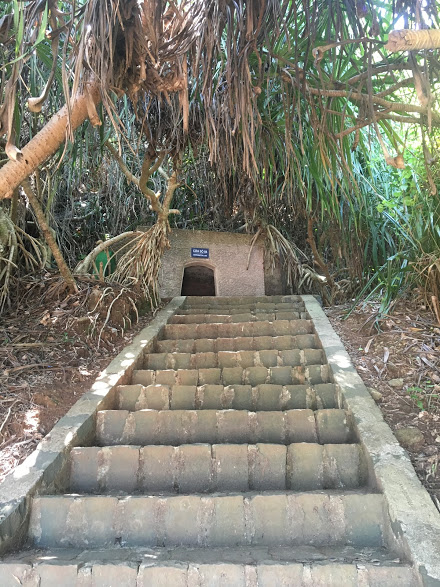
Entering the tunnels, there is absolute darkness. Sweat sticks to your skin as the lack of ventilation prevents the cool breeze from giving a break. Fire up your 1$ loaned flashlight and strain your eyes towards the seemingly endless, snaking hallways. Stand up straight and you crack – the tunnels are only about 5’5 high. As someone who is 6’3 (1,91), this was not helpful. Three hundred villagers lived within, seeking shelter for six years in total. Seventeen children were born in the tunnels, of whom six still reside in the village. Turn too quick and you may miss it – daily life went on. Children attended school classes, women gave birth, as men dug deeper to avoid the falling bombs. Meeting rooms and kitchens are located through the cave-like system, with smoke releases disguised to prevent giving away signals. A generator would power movies – a brief respite from the horrors surrounding the dwellings. These tunnels are a testament to engineering, sheer willpower, perseverance, and the spirit of the Vietnamese people to bend but not break during a time of destruction. Families held court and spent time in dug-out quarters barely larger than a cubical.
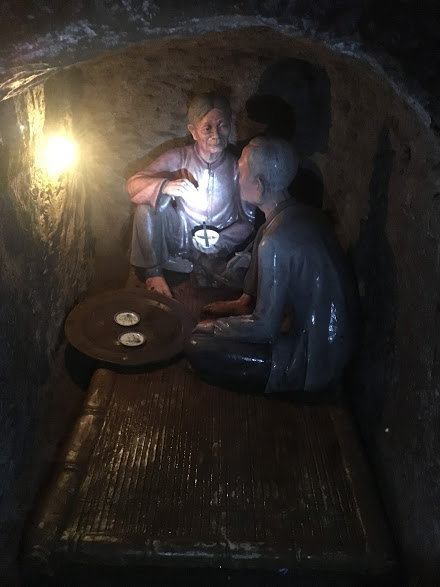
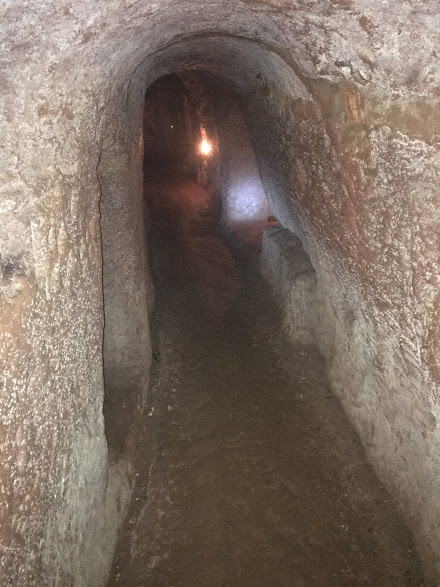
Continue hunched over throughout the labyrinthine halls, to try to even piece together an image of what living below ground, in the darkness, can to do not only one’s psyche, but a greater view of the world also. I can only imagine the hardships undertaken by the residents who left solely to tend to their fields; those of which weren’t turned into smoldering craters of shrapnel. After twist after turn, you emerge to an exit facing the sea, the salty breeze filling your nostrils and serving as a reminder of how much you actually sweat. In the modern sense, these viewpoints serve as a return to sanity; one emerges from the cave into unenclosed reality.
As I sat on a wooden railing, pondering life in the tunnels, a tour group emerged, chock full of Vietnamese school children. They ran towards me shrieking, camera phones in hand. Everyone wanted to say hello and take a photo with the faranji – foreigner. I gladly welcomed the hoards of people half my height, feeling like a paparazzi-surrounded celebrity. Several of the adults shook my hand, welcoming me and asking how my stay was in Vietnam and in Vinh Moc. Their outright friendliness and welcome stood out, given the fact that American planes decimated the village and its surroundings. Their hostility would have been understandable, but there was nary even a frown present. The ability of these people to look past the atrocities committed and take in every tourist with open arms is something to be cherished.
Having made a loop, I found the motorbike guide near the entrance. He inquired about my visit, and we took off back towards Hue. A day well spent with unforgettable memories, as cliché as it sounds. For those looking to visit the Vinh Moc tunnels, it’s simple. I had paid for a two-day tour with a local guide which included this area, but full day tours depart from Hue regularly. Tunnel entrance was 40,000 VND and a day tour should cost 500,000 – 700,000 VND, depending on style of transit. At the time of my visit, the exchange rate was around 1 USD – 23,000 VND. For those looking for a respite from Cu Chi and a less touristy tunnel experience, Vinh Moc is well worth the expense.
 Dispatches by Alec